

HazardTheDutchAD
Muted
- Sep 24, 2016
- 7,217
- 21,922
The word "Dutch" in the species title is misleading for some, it does not refer to the Dutch language or people in any way. This was actually the name of Ino's late horse that inspired the species.
As of early 2014, Ino has allowed her Dutch Angel Dragons to become an open, regulated species and anyone is invited to create one by following the guidelines.
For the species' origin story and to learn about the Dutch Angel Dragon universe and lore, please read the backstory.
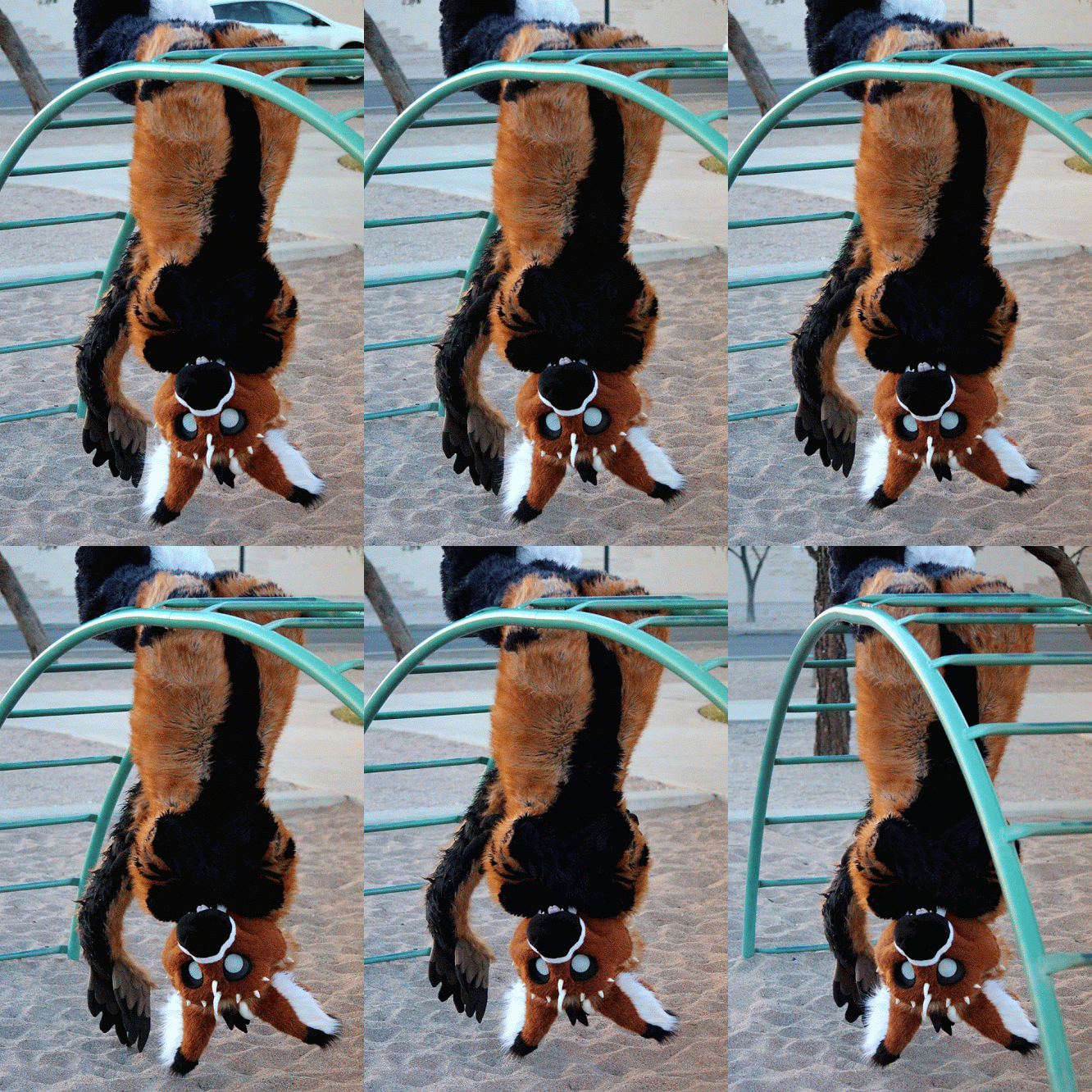 Say "hi" to Telephone, the first Dutch Angel Dragon
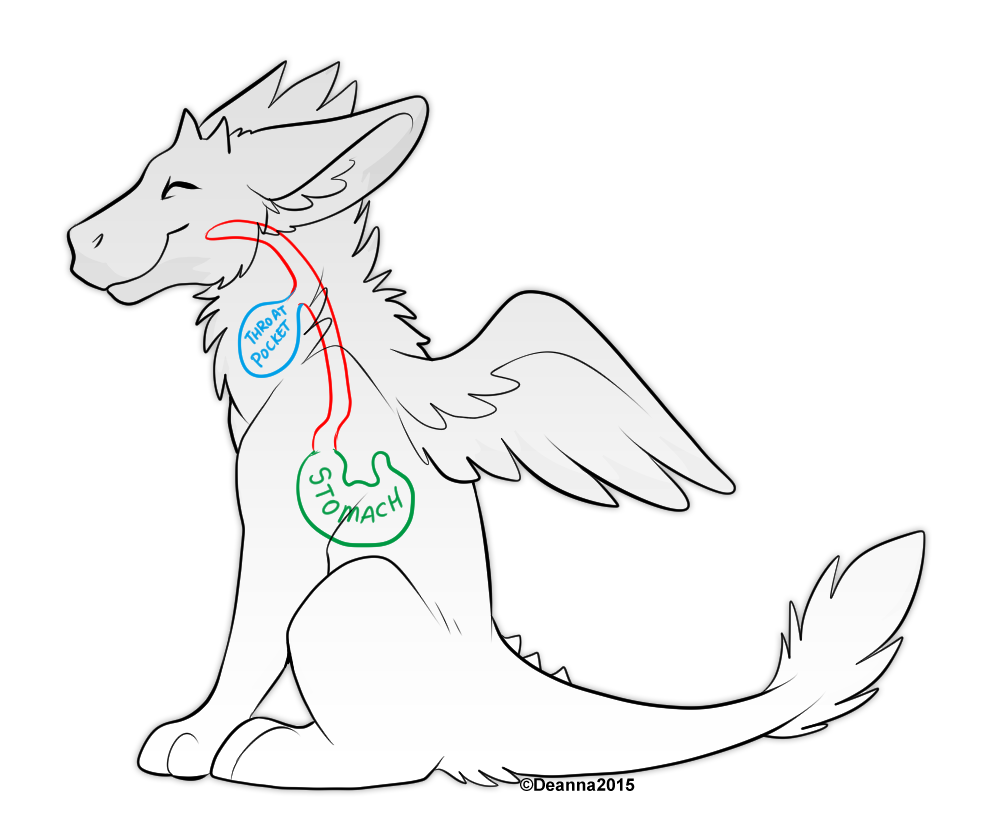
So what qualifies a character as a Dutch Angel Dragon? Two things: their physical appearance and their lore. They are a species of dragon that ALL have the following physical traits: horse-like anatomy, feathered wings, no genitalia or digestive tract (in fact they also do not have a respiratory system and lack other major organs), long ears, and fur coats. As a brief summary of their lore, they are supernatural beings similar to poltergeists or ghosts. They walk among us, often invisible, as guardian angels. These dragons live on a higher dimensional plane of existence and manipulate energy in various ways to grant them physical capabilities such as flight or elemental powers and can use energy to allow themselves to interface with people and objects.
The word "Dutch" in the species title is misleading for some, it does not refer to the Dutch language or people in any way. This was actually the name of Ino's late horse that inspired the species.
Learn about the species lore here
http://www.dutchangeldragons.com/specieslore
The five physical traits every dragon must have to classify it as a Dutch Angel Dragon is as follows:
-Horse-like anatomy*
-Long ears
-Feathered wings
-Fur coats
-No digestive tract or reproductive system
Notable features are the unique "digiuligrade" back legs but lack of a "secondary wrist joint" on the front limbs, horse-like body, and horse-like facial features such as muzzle shape and teeth layout.
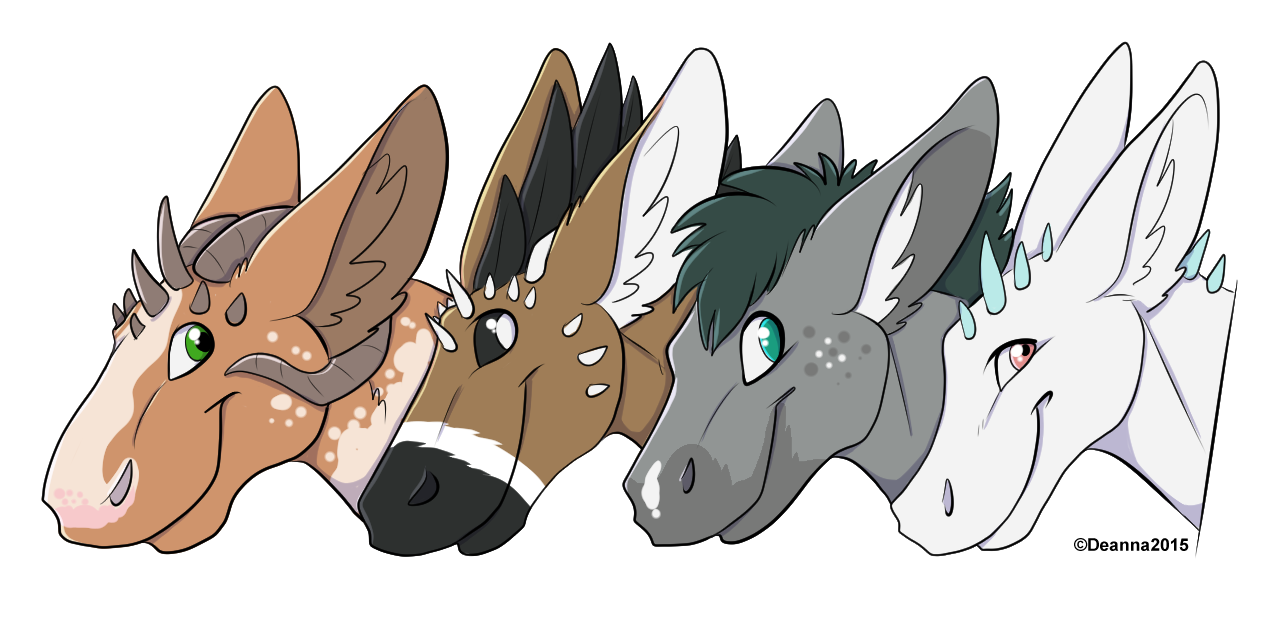
There are many different types of dragons ranging in size and shape- they can be as big as a bus or as small as a cat if they wanted. They have a remarkable ability to alter their appearance by "dying" like a phoenix and rebuilding themselves differently when they finally emerge from their egg. Since they are ageless, it is up to them to decide on how old they would like to look. The primary factor that plays a role in their appearance however is adaptations to their environment.
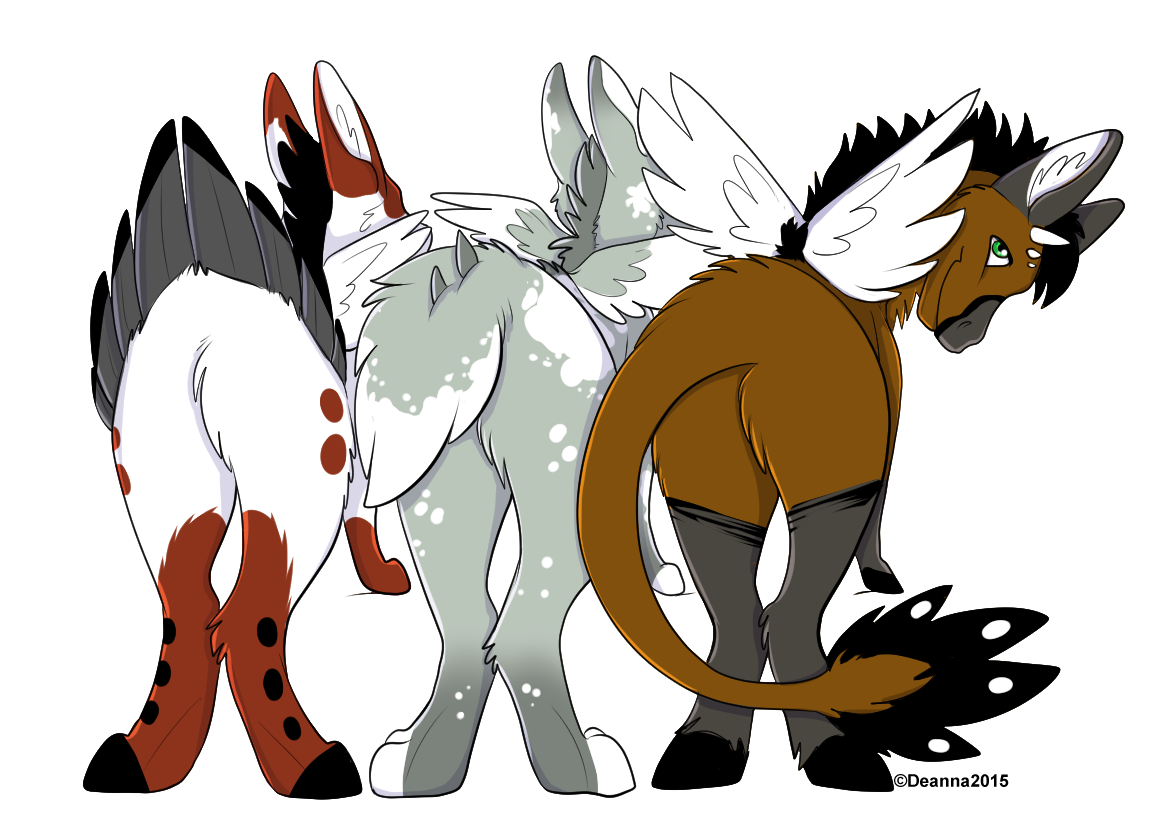 There are many types of tails these dragons might have, but most are long, furry tails with either feathers or manes at the tip to help with batting away pesky bugs or for flying. In some cases, they will have short docked tails that they were either born with or where torn off in a fight.
Sadly, once their tail is cut at any length it will not grow back, but feathers can. If a tail has been cut off at the base of the hindquarters, often the dragon will grow “butt feathers” in place of its tail. The dragon would have to go through the process of reincarnation to reclaim any lost limbs.
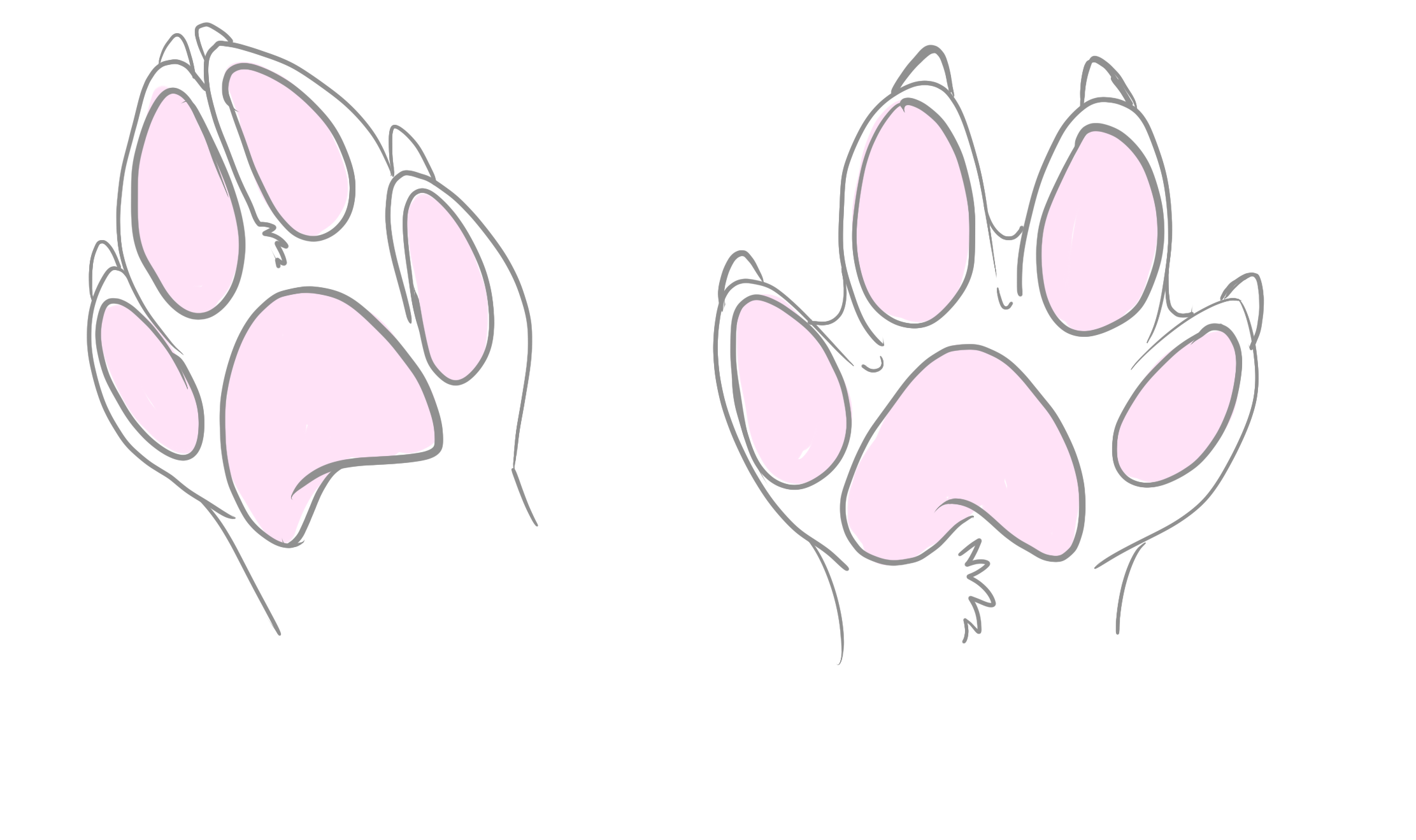 Some Dutch Angel Dragons have hooves, but most possess paws. The standard paws have four fingers/toes, no thumbs, a slight webbing between the digits, and semi-retractable claws on both hands and feet. They also have paw pads. Aquatic dragons may have a much more prominent webbing and under other kinds of conditions, there has been the development of scales.
 The species cannot reproduce by normal standards because they lack reproductive organs... however, if two dragons were to pass away together to be “reborn”, their souls can merge into a unique combination of their life force and energies. Much like a magnetic energy field is created when two opposite forces come together, a spark of life forms from this powerful energy flow and synchronization as the two souls temporarily become one and then split again, a part of them is left behind to be conjoined as a new soul and it develops into a third egg. The new angel dragon that is born will have a mix of the two “parents” coat colors and physical traits. This will last for a hundred years before the dragon gains the ability to pass away by itself and change its appearance. It is also born as a blank slate and will need to grow and learn just like any other animal.
Dutch Angel Dragons are very powerful beings and their greatest skill is the ability to harness energy and manipulate it in countless ways. Usually the kind and type is limited for what a dragon can possess, because only certain kinds of energy resonate with their soul properly. It is also impossible to resonate with opposing energies, such as control over both water and fire. Here is a list of possible energy types and range of uses:
Abilities
Most, if attached to a human, will follow them till that person's death when human passes on to Paradise. Unable to follow them to the higher realm, many become depressed or aggressive, driving them to claim a territory and cause “hauntings” for the living. It is also possible for a human to have up to three dragons that follow them. If in pairs, the dragons are either soul partners or friends for life and usually adopt another human after their passing.
Although most walk on all four feet, ones that are attached to a human have been seen to imitate a human by walking upright on two hind legs.

 Dutch Angel Dragons do not have a natural or universal sound. Instead they imitate other animals like birds, dog and cats or objects like bells, cars, and trains. When they find a sound they like they will mostly stick to that sound, but some have a large "vocabulary". Dutch Angel Dragons do not have a developed language system to communicate with each other through speech, but they can understand each other like any other animal would, mostly through body language.
http://www.dutchangeldragons.com/behavior--life MORE ON LIFE
http://www.dutchangeldragons.com/archangels ADMINS / AMBASSADORS
http://www.dutchangeldragons.com/design-guidelines CHARACTER DESIGN
http://www.dutchangeldragons.com WEBSITE
As of early 2014, Ino has allowed her Dutch Angel Dragons to become an open, regulated species and anyone is invited to create one by following the guidelines.
For the species' origin story and to learn about the Dutch Angel Dragon universe and lore, please read the backstory.
So what qualifies a character as a Dutch Angel Dragon? Two things: their physical appearance and their lore. They are a species of dragon that ALL have the following physical traits: horse-like anatomy, feathered wings, no genitalia or digestive tract (in fact they also do not have a respiratory system and lack other major organs), long ears, and fur coats. As a brief summary of their lore, they are supernatural beings similar to poltergeists or ghosts. They walk among us, often invisible, as guardian angels. These dragons live on a higher dimensional plane of existence and manipulate energy in various ways to grant them physical capabilities such as flight or elemental powers and can use energy to allow themselves to interface with people and objects.
The word "Dutch" in the species title is misleading for some, it does not refer to the Dutch language or people in any way. This was actually the name of Ino's late horse that inspired the species.
Learn about the species lore here
http://www.dutchangeldragons.com/specieslore
ANATOMY & TRAITS
Dutch Angel Dragons are a unique species of dragon that feature an anatomy very similar to the horses of Terra. Each dragon can be remarkably different from one another, but there are many traits (phenotypes) that are shared by all members of the species.
The five physical traits every dragon must have to classify it as a Dutch Angel Dragon is as follows:
-Horse-like anatomy*
-Long ears
-Feathered wings
-Fur coats
-No digestive tract or reproductive system
Notable features are the unique "digiuligrade" back legs but lack of a "secondary wrist joint" on the front limbs, horse-like body, and horse-like facial features such as muzzle shape and teeth layout.
There are many different types of dragons ranging in size and shape- they can be as big as a bus or as small as a cat if they wanted. They have a remarkable ability to alter their appearance by "dying" like a phoenix and rebuilding themselves differently when they finally emerge from their egg. Since they are ageless, it is up to them to decide on how old they would like to look. The primary factor that plays a role in their appearance however is adaptations to their environment.
Sadly, once their tail is cut at any length it will not grow back, but feathers can. If a tail has been cut off at the base of the hindquarters, often the dragon will grow “butt feathers” in place of its tail. The dragon would have to go through the process of reincarnation to reclaim any lost limbs.
Dutch Angel Dragons are very powerful beings and their greatest skill is the ability to harness energy and manipulate it in countless ways. Usually the kind and type is limited for what a dragon can possess, because only certain kinds of energy resonate with their soul properly. It is also impossible to resonate with opposing energies, such as control over both water and fire. Here is a list of possible energy types and range of uses:
Abilities
- Telekinesis
- Hydrokinetics
- Static/Electricity/Lightning
- Time
- Alchemy
- Dimension Hopping
- Speed
- Strength
- Darkness
- Light
- Poison
- Fire
- Psychic
- Gravity
- Light
- Darkness
- Electricity
- Fire
- Poison
- Ice
- Life/Healing
- Death/Decay
- Sound/Vibration/Echolocation
- Spacial/Alien
- Spirit
- Earth
- Fire
- Water
- Air
- Metal
BEHAVIOR & LIFE
Most Dutch Angel Dragons are very curious and social. They are sentient creatures with the intelligence equivalent to a young human child. They imitate sounds, coat colors, and the appearance of things they find appealing to them like an object or another animal. They are very possessive and become emotionally attached to things quite easily. Like most dragons; the Dutch Angel Dragon loves to hoard objects. These objects can be anything; from stuffed animals to socks, wristbands, rocks, live stock, they will find something to hoard. If their human companion takes a liking to something they will also start to hoard that object: like cars, kitchen appliances, or shoes.Most, if attached to a human, will follow them till that person's death when human passes on to Paradise. Unable to follow them to the higher realm, many become depressed or aggressive, driving them to claim a territory and cause “hauntings” for the living. It is also possible for a human to have up to three dragons that follow them. If in pairs, the dragons are either soul partners or friends for life and usually adopt another human after their passing.
Although most walk on all four feet, ones that are attached to a human have been seen to imitate a human by walking upright on two hind legs.
http://www.dutchangeldragons.com/behavior--life MORE ON LIFE
http://www.dutchangeldragons.com/archangels ADMINS / AMBASSADORS
http://www.dutchangeldragons.com/design-guidelines CHARACTER DESIGN
http://www.dutchangeldragons.com WEBSITE


